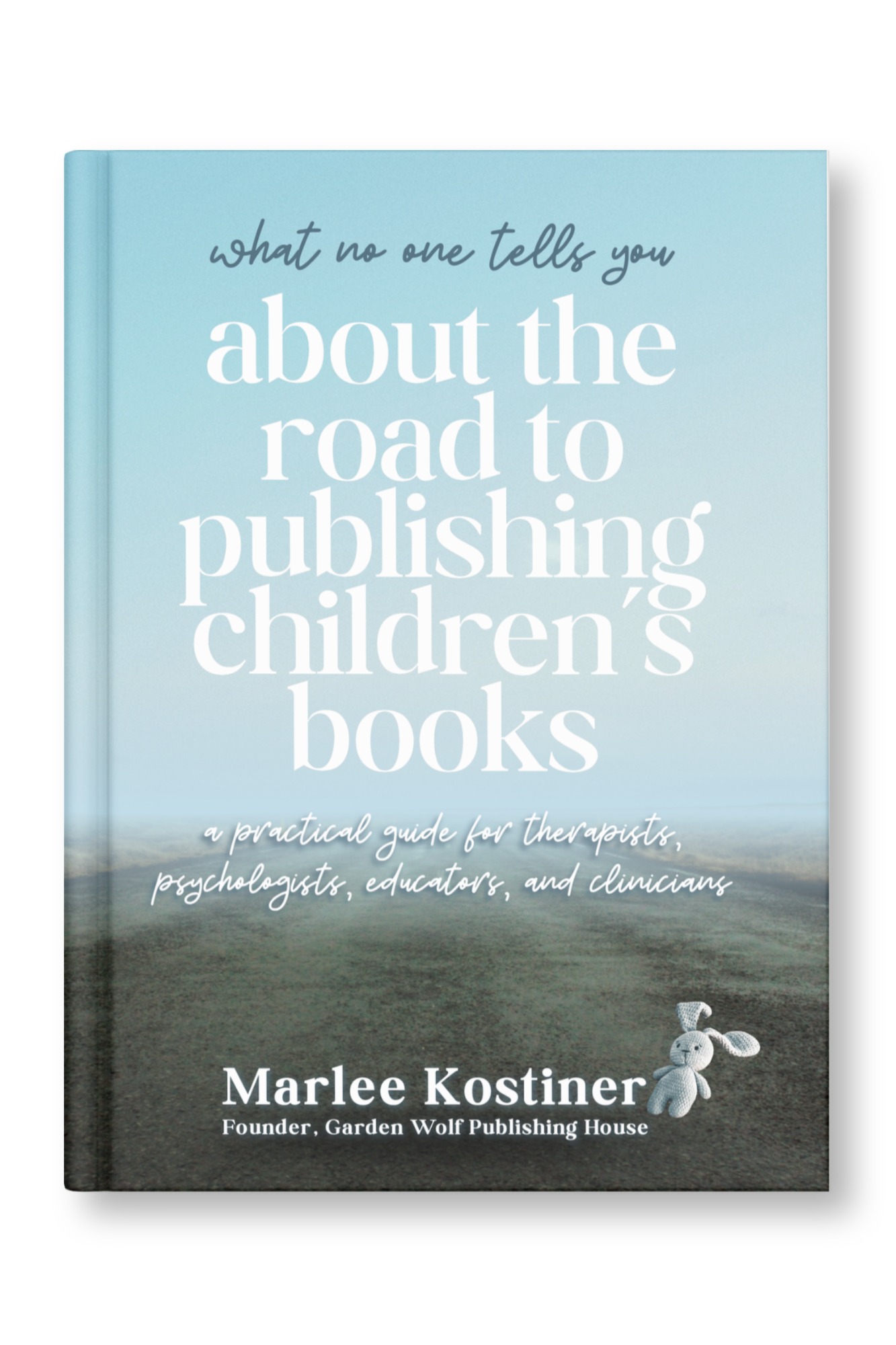
What No One Tells You About Publishing Children's Books
A complete guide for therapists, psychologists, educators, and clinicians who are thinking about publishing a children's book and want to understand what they're actually getting into, before signing anything.
- All three publishing models compared side by side: traditional, self-publishing, and hybrid, with real trade-offs and clear advantages laid out for each path
- What illustration actually costs, what realistic timelines look like for each path, and the questions that matter before you choose a collaborator
- Why the confusion you feel isn't a personal failing. It's structural. And exactly where it comes from
By signing up you agree to receive emails from Garden Wolf Publishing House. Unsubscribe anytime.
"The confusion is real. And it is not your fault. This guide is an attempt to fix that."
Marlee Kostiner · Founder, Garden Wolf Publishing House
Most publishing advice wasn't written for children's books
Most publishing advice was written for people trying to sell adult fiction, literary memoirs, or business books. What you're trying to make is different: a book that belongs on the mainstream shelf, with your expertise woven in at a depth kids absorb without realizing it, and resources in the back for the caregivers, educators, and clinicians in their lives.
Illustration isn't decoration. It's half the story, and the interpretive decisions belong to the illustrator, not the author. A full picture book typically runs $2,000 to $10,000+ before a single page is designed. Most people find this out after they've already started.
Then there are the three publishing paths, each with real advantages and real drawbacks, and most people don't get a clear explanation of how they actually work until after they've made a decision.
For practitioners, the book is rarely about royalties. A well-made children's book functions as a credential that lives in someone's home and gets touched every day. Speaking invitations follow. Clients find you differently. The book keeps working long after the launch.
That's what this guide addresses, across 17 chapters, without a pitch for any particular path. Real timelines. Real costs. The questions that matter before you sign anything.
By the end, you'll be able to look at the options in front of you and know which one makes sense for your specific goals.
What's Inside
A sampling from all 17 chapters
Why Publishing Children's Books Is So Confusing
One source says you need an agent. Another says self-published books don't get into libraries. A company offers 500 copies for $18,000 and you can't tell if that's a scam. The advice contradicts itself because the industry wasn't built with you in mind, and almost nobody says that upfront.
What Makes a Children's Book Actually Good
The books families read fifty times are working on two levels at once: the child is inside the story, and the adult holding it can sense the expertise behind it. This chapter is about what that second layer requires, and why it's harder to produce than it looks.
The Winning Combination
The mental health professionals who write the best books consistently bring three things: real expertise, genuine passion, and personal connection to the subject. Most already have all three. They just haven't thought of them as qualifications. This chapter makes the case that they are.
Your Book Is a Business Card Families Keep Forever
A business card gets thrown away. A book gets kept. A well-made children's book functions as a credential that lives in someone's home and gets touched every day, and opens speaking opportunities, shifts how clients find you, and compounds over time.
The Illustration Process
Illustration for a full picture book typically runs $2,000 to $10,000 or more. The illustrator is a creative collaborator making interpretive decisions, not a technician executing your vision. If you go the traditional route, you typically don't choose yours at all.
What Does It Really Cost?
Self-publishing done properly: $8,000–$18,000. Hybrid publishing packages: $3,000–$20,000. Traditional publishing: nothing upfront, but creative control, rights, and royalties. This chapter breaks down the real numbers across all three paths.
Free Resource
Ready to actually understand what publishing looks like for you?
Seventeen chapters. Three publishing models compared honestly. Real costs, real timelines, and the questions to ask before you sign anything. Written for professionals who want to make an informed decision, not a pressured one.